Wednesday, 6 April 2022

Yarrow – A Herb for All Seasons: Part 2 Traditional Use

Yarrow Flowers
Article © Debs Cook
Image by Tatiana6

Whereas many herbs have a clear focus of use – such as thyme for coughs or chamomile for stomach problems, this therapeutic clarity is lacking for Yarrow and so its potential healing properties are often overlooked in favour of other herbs, even by herbal practitioners. Hence, Yarrow ends up only being used in teas for the management of viral-induced fevers. Although this is a wonderful feature of yarrow, it is by no means its only attributes and the broad range of its current and historical applications reflects the unusually high number of physiologically active compounds it contains. In the first part of this 2-part article on Yarrow, the modern view of the herb is explored. Part 2 gives an overview of its traditional use from various documented sources. In interpreting the ancient texts, a major stumbling block to our understanding is that disease conditions were named much less specifically than today, as some of these quotes below show.

Common Yarrow is a perennial herb that often gets listed as a weed, wildflower or a perennial garden flower depending on which publication you are reading. It can be found in meadows, at the side of roads, in lawns and grassland and will self-seed readily if allowed to in the garden. The Latin name, Achillea millefolium, is derived from the fact that the herb was dedicated to the God Achilles by the Greeks and the millefolium refers to the many fine leaflets on each yarrow leaf. The Greeks dedicated the herb yarrow to the Achilles, whom they believed cured warriors using yarrow leaves during the battle at Troy. This is probably why yarrow received the name Soldier's Woundwort, they also used it to stop haemorrhaging. Dioscorides in the 1st century A.D. considered it to be “excellent for an excessive discharge of blood, old and new ulcers, and for fistulas [ulcers].”

An underrated herb with a myriad uses, Yarrow has been in documented use as a cold remedy since the Middle Ages. The 12th century German herbalist and Abbess, Hildegard Von Bingen, recommended taking wine infused with powdered yarrow to help heal wounds and to manage fevers. The Druids made amulets from yarrow to protect them from evil. And it was also believed to attract friends and distant relations to you when you’d lost touch. If added to a bridal bouquet, it was also believed to ensure that love will last for at least seven years.

By the 16th century herbalist John Gerard knew yarrow also as Nose-Bleed and cited its uses as being a remedy for toothache, diarrhoea, migraine and as a means of curing excessive ejaculation, writing that yarrow ”cureth the inward excorations of the yard of a man, coming by reason of pollutions of extreme flowing of the seed, although” he cautioned “the issue does cause inflammation and swelling of those secret parts, though the spermaticke matter do come downe in great quantity, if the juice be injected with a syringe , or the decoction.

Culpeper in the 17th century recommended yarrow for its astringent nature, for treating piles, writing “As a medicine [yarrow] is drying and binding. A decoction of it boiled with white wine, is good to stop the running of the reins in men, and whites in women; restrains violent bleedings, and is excellent for the piles. A strong tea in this case should be made of the leaves, and drank plentifully; and equal parts of it, and of toad flax, should be made into a poultice with pomatum, and applied outwardly. This induces sleep, eases the pain, and lessens the bleeding. An ointment of the leaves cures wounds, and is good for inflammations, ulcers, fistulas, and all such runnings as abound with moisture.

Sir John Hill in his 18th century ‘Family Herbal’ echoed Culpeper’s use for yarrow as a treatment for piles adding his own remedy of a sweetened decoction, he recommended that the tops of the herb (flowers and young leaves) were best used fresh writing that “these are to be boiled in water, and the decoction sweetened with fine sugar”, the resulting liquid he wrote was “excellent against the bleeding of the piles, and bloody fluxes, and overflowing of the menses”.

In his 19th century ‘Model Botanic Guide to Health’ William Fox M.D. wrote of yarrow “There is not a single herb in the whole vocabulary that has done so much good, or is more universally esteemed; it has prevented more disease and doctor’s bills than all the books they have written about medical science.” Glowing praise indeed, Fox used yarrow in many of the same ways that his herbal predecessors did, writing that “a strong infusion is a specific to stay haemorrhage in the bowels,” and that “lint steeped in [an infusion of yarrow] and put up the nostrils will stop bleeding of the nose.

Yarrow continues to be a versatile herb being particularly valued for managing fevers, but clearly having broader applications according to these texts. This useful and aromatic herb grows prolifically near to me providing a good supply in late summer to make tinctures, to dry ready for yarrow tea or to make a wonderful herbal inhalant.

Disclaimer: Whilst every effort has been made to source the most up to date and accurate information, we cannot guarantee that remedies in our articles are effective, when in doubt, consult your GP or a qualified Medicinal Herbalist. Remember also that herbal remedies can be dangerous under certain circumstances therefore you should always seek medical advice before self-treating with a homemade remedy, especially if you are pregnant, breast feeding or suffer from any known illness which could be adversely affected by self-treatment.

Tuesday, 1 March 2022

Yarrow – A Herb for All Seasons: Part 1 Modern Use

Yarrow Flowers
Article:© Debs Cook
Image Willfried Wende

Whereas many herbs have a clear focus of use – such as thyme for coughs or chamomile for stomach problems, this therapeutic clarity is lacking for Yarrow and so its potential healing properties are often overlooked in favour of other herbs, even by herbal practitioners. Hence, Yarrow ends up only being used in teas for the management of viral-induced fevers. Although this is a wonderful feature of yarrow, it is by no means its only attributes and the broad range of its current and historical applications reflects the unusually-high number of physiologically-active compounds it contains. In first part of a 2-part article on Yarrow, the modern view of the herb is explored. Part 2 looks back at the history of its use.

Part 1 - Modern Use

Yarrow’s constituents include flavonoids such as apigenin, a constituent currently being studied as a potential treatment of neurological diseases in the adult brain. Other flavonoids include rutin, luteolin, quercetin and kaempferol. Alkaloids are also present, such as achilleine which has haemostatic properties. This gives yarrow its ability to staunch blood flow. The volatile oils in the herb are abundant, including azulene a blue pigment also found in German Chamomile and borneol, terpineol, cineol, eugenol, thujone, pinene, camphor, achillin and sabinene. Each compound has its own particular physiological properties. The herb also contains salicylic acid (a compound in the aspirin family) which accounts, at least partly, for Yarrow’s pain-killing properties and fever-managing effects. The herb also contains phytosterols, tannins and saponins as well as coumarins.

Yarrow’s physiological actions have been documented as analgesic, anti-diarrheal, anti-inflammatory, anti-scorbutic, antiseptic, anti-spasmodic, aromatic, astringent, carminative, cholagogue, de-obstruent, diaphoretic, digestive, emmenagogue, febrifuge, haemostatic, odontalgic, stimulant, sudorific, tonic, vasodilator and vulnerary properties. [If you are unsure of any of the herbal properties mentioned within this article, check out our Herbal Glossary of Terms article.]

Not surprisingly, from this list of attributes, one of Yarrow’s folk names is Nosebleed, it was traditionally used to stop nose bleeds by putting the crushed leaves of the plant into the nostrils. Other applications abound. For example, Yarrow can help to reduce high blood pressure, stimulate the appetite, ease stomach cramps and menstrual pain. It can be used to treat flatulence, gastritis, enteritis, gallbladder and liver problems, and internal haemorrhaging.

On a personal note, my Nanna used to warm some olive oil and add a few crushed yarrow flowers to it and leave it to 'steep' for a few minutes before popping some in my ear when I had earache. It always helped to sooth the problem and smelt nicer than just olive oil, She called it her ‘Fairy Flower Magic Oil’. Here are some more domestic applications of Yarrow.

Dried yarrow can be used for decoration and in pot-pourri mixes. Leaves added to a compost bin speed up the decomposition process. Ground Yarrow leaves have been used in snuff mixtures and a weak infusion of the flowers makes a good toner for greasy skin.

Tincture of yarrow can be added to lotions, tonics, salves, balms and creams for use on greasy skin where astringent and antiseptic properties are required, add also to shampoos and rinses for greasy hair.

WARNING
- Allergic rashes and skin sensitivity to sunlight may result with prolonged use of yarrow. Avoid large doses in pregnancy because the herb is a uterine stimulant.

Disclaimer:
Whilst every effort has been made to source the most up to date and accurate information, we cannot guarantee that remedies in our articles are effective, when in doubt, consult your GP or a qualified Medicinal Herbalist. Remember also that herbal remedies can be dangerous under certain circumstances therefore you should always seek medical advice before self-treating with a homemade remedy, especially if you are pregnant, breast feeding or suffer from any known illness which could be adversely affected by self-treatment.

Wednesday, 2 February 2022

Remembering Barbara Griggs

Barbara Griggs died last month. I first got to know Barbara as the author of Green Pharmacy – A History of Herbal Medicine. It was a recommended text in my studies of herbal medicine whilst training to be a practitioner in the 1990's. Sometime later, I was fortunate to meet her and later to count her as a friend. For several years before the Covid pandemic I sat next to her at seminars of the College of Practitioners of Phytotherapy in London. Barbara was an honorary member, as she was of other professional herbal bodies, being lauded among them for her promulgation of the value of herbal medicine.

Barbara started life as a journalist and moved into writing books on natural medicine, but Green Pharmacy is by far and away her masterpiece. It traces the origins of the use of herbal medicine from the earliest records of humankind though various cultures to the present day. Barbara was a writer particularly admired for her meticulous research. But for Green Pharmacy and in the days before Google Search, Barbara quite literally did the footwork - meeting key herbalists not only in the UK but further afield, including the United States. In the US she got first-hand information from those familiar with American Indian medicine and its development into the Eclectic movement, which was later incorporated into British herbal practice. She consulted herbal manufacturers, she attended patient consultations with the renowned herbalist John Hyde. She consulted academics, newspaper medical correspondents, teachers and librarians in charge of special collections – in fact she tracked down anyone who might reveal information on herbal medicine.

In her introduction to the Green Pharmacy Barbara says “I am aware that had I been a qualified pharmacognosist and pharmacist, an anthropologist, a historian and an expert practitioner of herbal medicine, this would have been a vastly better and more authoritative book, free of the shortcomings which may be found in it.” I don't agree - this is the work of a unique mind that can piece together disparate threads across many disciplines into a cohesive whole. She tells a good story, no doubt drawing on her journalistic skills. It’s a story ratified by the many she consulted, which will remain the definitive text on the history of Western Herbal Medicine.

Being a strong advocate of herbal medicine, Barbara, in scattered phrases through all her works appeared to take side-ways strikes at the medical profession, but discord was far from her intention. Rather she looked forward to a time where the Pharmaceutical industry and the medical profession in general would accept their limitations and take an open-minded view to embrace the value of traditional herbal medicine. In other words, to yield a place for the practice of herbal medicine in a modern world, particularly in relation to complex medical conditions, which are on the rise. She imagined a true integration of knowledge and talent for the benefit of humankind. The herbal world salutes you, Barbara. It was a job well done. May you rest in peace.

Talking Heads - Barbara Griggs from The Medical Herbalists on Vimeo.


Ann Walker PhD FCPP MNIMH RNutr
Herbal Practitioner and Nutritionist
Course Director Discovering Herbal Medicine

Thursday, 2 December 2021

What Herbal Research Does For Us

Herb Garden: Photo & Article © Ann Walker

These days, apart from folklore, documented traditional use of herbs and the knowledge of herbalists with clinical experience, there is an addition resource at our fingertips: from research. Clearly much of this research is aimed at finding key herbal ingredients which could be used or copied by the pharmaceutical industry to produce modern medicines. While laboratory studies like these can highlight compounds in a herb that might support physiology, these types of studies cannot predict the effects of herbs on human beings.

For that we need studies on human volunteers. Fortunately, clinical trial evidence of the use of many herbs is becoming increasingly available. This is deepening our knowledge and understanding and even opening-up new applications for herbs to add to their traditional use. Although funding for such work is scarce, progress is being made. Human studies are highlighted in nineteen new herbal monographs prepared for the Discovering Herbal Medicine course. The herbs in the monographs are popular and widely-available from many outlets, including the internet, as tablets or capsules carrying a Traditional Herbal Registration (THR) – a seal of safety and quality for home use.

In preparing the new monographs, we were keen to convey two main themes: traditional herbal use and modern research. Without documented traditional use, the applications of botanicals for disease would be largely unknown or confined to folklore and word-of-mouth. The THR scheme requires documented evidence for the of use of herbs for at least fifteen years in Europe.

Fortunately, many of our predecessors have kept detailed accounts of herbal remedies and examples of these are used throughout these monographs. Going on these old records, our ancestors weren’t so badly off without the benefits of modern medicine. Indeed, they had access to some powerful herbal medicines. Not only is modern research supporting this ancient knowledge, but it is augmenting it in ways our ancestors would never have dreamed of!

PMID, PubMed identifier

Ann Walker PhD FCPP MNIMH RNutr
Herbal Practitioner and Nutritionist
Course Director Discovering Herbal Medicine

Thursday, 25 November 2021

Lavender: A Nerve Tonic

Lavender Flowers: Photo & Article © Ann Walker

The traditional applications of Lavender are diverse and numerous, extending from positive effects on the nervous and digestive systems to soothing skin problems. Lavender has a valuable role in midwifery and in palliative care, mostly as a healing agent in aromatherapy through the skin. Lavender oil is gentler on the skin than almost all other essential oils and can be safely applied without dilution to help heal skin problems such as wounds, burns etc.

Less commonly, but increasingly, the oil is used as a remedy internally and capsules are now available to the public, for use as a carminative and nervine (search lavender on British Herbal Medicine Association website https://bhma.info/). A series of small studies of lavender oil capsules showed promising results in reducing anxiety and depression in the elderly (e.g. PMID: 24456909). But it is not just the essential oil which has nervine properties, a small study (PMID: 32444033) of 60 elderly people showed that in just 2 weeks, drinking 4 g of lavender tea per day can reduce depression and anxiety scores.

There have also been small clinical studies showing that Lavender oil has positive effects on mental function in Alzheimer’s disease, in stress conditions and for insomnia. These studies confirm the traditional understanding of the health benefits of lavender for the nervous system, being a unique mix of calming, balancing and uplifting properties. The herb is well indicated for bringing a harmonious balance in all types of stress and emotional situations.

PMID, PubMed identifier

Ann Walker PhD FCPP MNIMH RNutr
Herbal Practitioner and Nutritionist
Course Director Discovering Herbal Medicine

Monday, 25 October 2021

Echinacea for Viral Infections

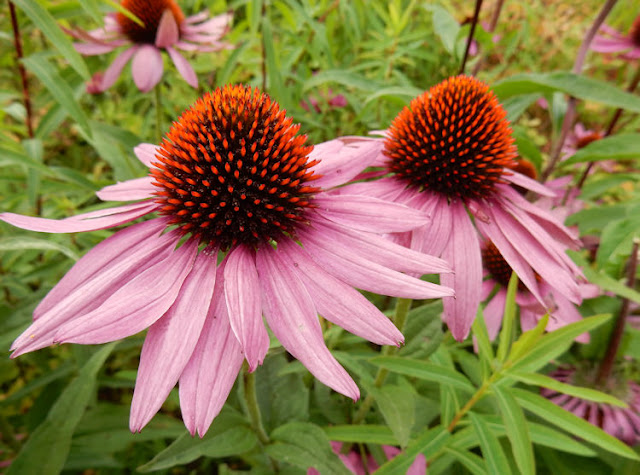
Echinacea Flowers
Echinacea (E. purpurea) Photo & Article © Ann Walker

Echinacea had a long traditional of medicinal use among American’s First peoples and it was taken up as a remedy for infections in a big way by the early American colonists. The herb today is one of the most popular over-the-counter remedy for respiratory infections, including the common cold. Several compounds in Echinacea have been shown to kill microbes, including viruses, and the most important are the alkylamides. As well as having direct broad-spectrum anti-microbial properties, in the laboratory Echinacea shows its ability to enhance immune function, including promoting white blood cells to tackle infective agents.

While the anti-viral effects of Echinacea are seen every day in clinical practice among herbalists, getting clear evidence of the efficacy of the herb for infections through clinical studies has proved difficult. For a start, there are several species of Echinacea used medicinally and while E. purpurea is the most common, some studies have reported on E. angustifolia.

Moreover, human studies have been done both on the leaves and flowers of the plant and on the root, which adds complexity. Regarding E. purpurea root, which is most commonly found in over-the-counter products, a Cochrane systematic review in 2006 (PMID: 16437427), concluded that the aerial parts of E. purpurea showed weak evidence of being effective for naturally acquired colds in adults.

Another team also published a meta-analysis* in 2006 (PMID: 16678640), looking at the effects of the herb after inoculation of the cold virus. In that study, infection rate was 55% higher for people taking placebo compared with those on Echinacea. Furthermore, those taking Echinacea who did contract a cold, suffered reduced symptoms.

There have been other meta-analyses and systematic reviews, some of which, but not all, showed that the herb decreased the odds of developing colds and shortened cold duration. Unfortunately, funding for clinical trials on herbs is becoming more and more difficult to obtain these days, so obtaining proof of efficacy which will stand up to mainstream medical scrutiny will take a long time. While we wait for gold-standard clinical trial evidence we already know that Echinacea in all its forms is a very safe medicine and well tolerated. For many people it is already the go-to remedy for all types of infections.

* Pooled data from several placebo-controlled clinical studies
PMID, PubMed identifier

Ann Walker PhD FCPP MNIMH RNutr
Herbal Practitioner and Nutritionist
Course Director Discovering Herbal Medicine

Wednesday, 7 April 2021

Discovering Herbal Medicine Course NOW Online!

 
It has taken a year to get the Discovering  Herbal Medicine online, but I am delighted that I have had the opportunity and  time to conserve, update and rebrand this legacy distance learning course.  Accredited by the British Herbal Medicine  Association, DHM has been delivered for over 40 years in mailed-out format, but  this version will cease as soon as the current students have completed their  studies.

Putting DHM online will make it more readily available to a wider audience both in the UK and abroad.DHM has been designed to enable the herbal enthusiast to explore the healing relationship between the human body in health and disease and the wonderful remedial properties of herbs that herbal practitioners use on an everyday basis.

This one-year course is not a practitioner course, as the amount of information that can be covered in one year is clearly limited. However, it does provide the opportunity to absorb the essence of the relationship between human health and plant medicine without resorting to an enormous amount of clinical detail. Having said that, this is not a superficial course and does require considerable application and fundamental interest in the power of nature.

For more information and to purchase the course go to www.newvitalitytuition.com.

The cost of the full course (four Stages comprising twelve Modules) is £700 and there is an introductory discount of £125 using the code “intro2021” which is valid until the end of April. Alternatively, each of the four Stages can be purchased independently for £185.

Ann Walker DHM Course Director.