Thursday, 2 December 2021

What Herbal Research Does For Us

Herb Garden: Photo & Article © Ann Walker

These days, apart from folklore, documented traditional use of herbs and the knowledge of herbalists with clinical experience, there is an addition resource at our fingertips: from research. Clearly much of this research is aimed at finding key herbal ingredients which could be used or copied by the pharmaceutical industry to produce modern medicines. While laboratory studies like these can highlight compounds in a herb that might support physiology, these types of studies cannot predict the effects of herbs on human beings.

For that we need studies on human volunteers. Fortunately, clinical trial evidence of the use of many herbs is becoming increasingly available. This is deepening our knowledge and understanding and even opening-up new applications for herbs to add to their traditional use. Although funding for such work is scarce, progress is being made. Human studies are highlighted in nineteen new herbal monographs prepared for the Discovering Herbal Medicine course. The herbs in the monographs are popular and widely-available from many outlets, including the internet, as tablets or capsules carrying a Traditional Herbal Registration (THR) – a seal of safety and quality for home use.

In preparing the new monographs, we were keen to convey two main themes: traditional herbal use and modern research. Without documented traditional use, the applications of botanicals for disease would be largely unknown or confined to folklore and word-of-mouth. The THR scheme requires documented evidence for the of use of herbs for at least fifteen years in Europe.

Fortunately, many of our predecessors have kept detailed accounts of herbal remedies and examples of these are used throughout these monographs. Going on these old records, our ancestors weren’t so badly off without the benefits of modern medicine. Indeed, they had access to some powerful herbal medicines. Not only is modern research supporting this ancient knowledge, but it is augmenting it in ways our ancestors would never have dreamed of!

PMID, PubMed identifier

Ann Walker PhD FCPP MNIMH RNutr
Herbal Practitioner and Nutritionist
Course Director Discovering Herbal Medicine

Thursday, 25 November 2021

Lavender: A Nerve Tonic

Lavender Flowers: Photo & Article © Ann Walker

The traditional applications of Lavender are diverse and numerous, extending from positive effects on the nervous and digestive systems to soothing skin problems. Lavender has a valuable role in midwifery and in palliative care, mostly as a healing agent in aromatherapy through the skin. Lavender oil is gentler on the skin than almost all other essential oils and can be safely applied without dilution to help heal skin problems such as wounds, burns etc.

Less commonly, but increasingly, the oil is used as a remedy internally and capsules are now available to the public, for use as a carminative and nervine (search lavender on British Herbal Medicine Association website https://bhma.info/). A series of small studies of lavender oil capsules showed promising results in reducing anxiety and depression in the elderly (e.g. PMID: 24456909). But it is not just the essential oil which has nervine properties, a small study (PMID: 32444033) of 60 elderly people showed that in just 2 weeks, drinking 4 g of lavender tea per day can reduce depression and anxiety scores.

There have also been small clinical studies showing that Lavender oil has positive effects on mental function in Alzheimer’s disease, in stress conditions and for insomnia. These studies confirm the traditional understanding of the health benefits of lavender for the nervous system, being a unique mix of calming, balancing and uplifting properties. The herb is well indicated for bringing a harmonious balance in all types of stress and emotional situations.

PMID, PubMed identifier

Ann Walker PhD FCPP MNIMH RNutr
Herbal Practitioner and Nutritionist
Course Director Discovering Herbal Medicine

Monday, 25 October 2021

Echinacea for Viral Infections

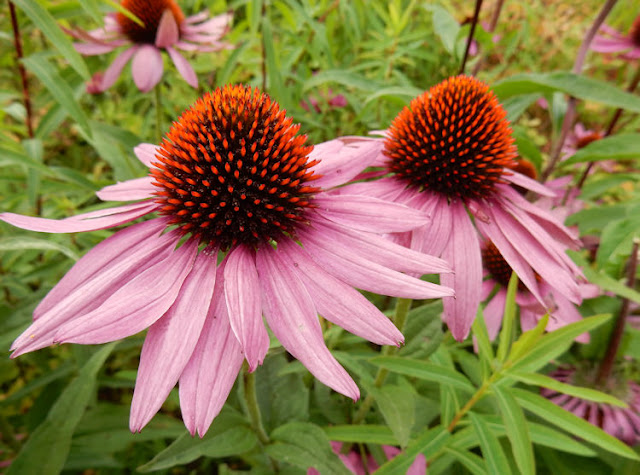
Echinacea Flowers
Echinacea (E. purpurea) Photo & Article © Ann Walker

Echinacea had a long traditional of medicinal use among American’s First peoples and it was taken up as a remedy for infections in a big way by the early American colonists. The herb today is one of the most popular over-the-counter remedy for respiratory infections, including the common cold. Several compounds in Echinacea have been shown to kill microbes, including viruses, and the most important are the alkylamides. As well as having direct broad-spectrum anti-microbial properties, in the laboratory Echinacea shows its ability to enhance immune function, including promoting white blood cells to tackle infective agents.

While the anti-viral effects of Echinacea are seen every day in clinical practice among herbalists, getting clear evidence of the efficacy of the herb for infections through clinical studies has proved difficult. For a start, there are several species of Echinacea used medicinally and while E. purpurea is the most common, some studies have reported on E. angustifolia.

Moreover, human studies have been done both on the leaves and flowers of the plant and on the root, which adds complexity. Regarding E. purpurea root, which is most commonly found in over-the-counter products, a Cochrane systematic review in 2006 (PMID: 16437427), concluded that the aerial parts of E. purpurea showed weak evidence of being effective for naturally acquired colds in adults.

Another team also published a meta-analysis* in 2006 (PMID: 16678640), looking at the effects of the herb after inoculation of the cold virus. In that study, infection rate was 55% higher for people taking placebo compared with those on Echinacea. Furthermore, those taking Echinacea who did contract a cold, suffered reduced symptoms.

There have been other meta-analyses and systematic reviews, some of which, but not all, showed that the herb decreased the odds of developing colds and shortened cold duration. Unfortunately, funding for clinical trials on herbs is becoming more and more difficult to obtain these days, so obtaining proof of efficacy which will stand up to mainstream medical scrutiny will take a long time. While we wait for gold-standard clinical trial evidence we already know that Echinacea in all its forms is a very safe medicine and well tolerated. For many people it is already the go-to remedy for all types of infections.

* Pooled data from several placebo-controlled clinical studies
PMID, PubMed identifier

Ann Walker PhD FCPP MNIMH RNutr
Herbal Practitioner and Nutritionist
Course Director Discovering Herbal Medicine

Wednesday, 7 April 2021

Discovering Herbal Medicine Course NOW Online!

 
It has taken a year to get the Discovering  Herbal Medicine online, but I am delighted that I have had the opportunity and  time to conserve, update and rebrand this legacy distance learning course.  Accredited by the British Herbal Medicine  Association, DHM has been delivered for over 40 years in mailed-out format, but  this version will cease as soon as the current students have completed their  studies.

Putting DHM online will make it more readily available to a wider audience both in the UK and abroad.DHM has been designed to enable the herbal enthusiast to explore the healing relationship between the human body in health and disease and the wonderful remedial properties of herbs that herbal practitioners use on an everyday basis.

This one-year course is not a practitioner course, as the amount of information that can be covered in one year is clearly limited. However, it does provide the opportunity to absorb the essence of the relationship between human health and plant medicine without resorting to an enormous amount of clinical detail. Having said that, this is not a superficial course and does require considerable application and fundamental interest in the power of nature.

For more information and to purchase the course go to www.newvitalitytuition.com.

The cost of the full course (four Stages comprising twelve Modules) is £700 and there is an introductory discount of £125 using the code “intro2021” which is valid until the end of April. Alternatively, each of the four Stages can be purchased independently for £185.

Ann Walker DHM Course Director.

Friday, 10 January 2020

Diuretic Effect of Dandelion

Article & Photo © Ann Walker

Dandelion leaf is used in traditional western herbal medicine as a diuretic for reducing fluid retention. Indeed its French name of pis-en-lit (piss the bed) is testament to this. Herbal practitioners find the herb useful these days for reducing oedema, for example helping patients to reduce ankle oedema on long-haul flights or for premenstrual ‘heavy-legs’. But what scientific evidence is there for this effect? A search the world’s medical literature (PubMed) shows that there was, indeed, a study of Dandelion’s diuretic effect published by American researchers in 2009 (PMID: 19678785).

It was only a small pilot study, carried out over a single day using an aqueous-alcoholic extract of fresh dandelion leaf (using a dose of 8 ml three times in the day) on 17 people. It was not a blinded or controlled study, so it will not satisfy the ‘gold standard’ criteria for drug research, but nevertheless it does provide the first documented evidence of the diuretic effect of dandelion in a group of humans. In the study, the excretion ratio (urine volume-to-fluid intake) was found to have increased for all subjects in the 5-hour period following the second dose of the extract, indicating a diuretic effect.

The precise mechanism, or indeed even the active constituents, responsible for the diuretic effect of dandelion are not known. There are some unique compounds with long names in the plant: viz. eudesmanolide and germacranolide, but there are also others such as taraxasterol, which, no doubt, also contribute to its physiological effects. Apart from diuresis, these effects include, liver stimulant (laxative), anti-inflammatory, anti-oxidant, anti-carcinogenic, pain killing, blood-glucose modulating, and blood-thinning properties.

There is increasing laboratory research evidence for these effects, but sadly, no human trials for a variety of traditional applications of the herb including: liver and gallbladder problems, breast diseases, digestive problems, joint pain, fever and skin diseases. There is plenty of scope here for many PhD topics in the future, if someone comes up with the funding


PMID = PubMed identifier

Ann Walker PhD, FCPP, MNIMH, RNutr
Course Director DHM
Herbal Practitioner

Friday, 3 January 2020

Astragalus – A Herb to Watch

Article and Photo © Ann Walker
The root of Astragalus membranaceus has been used in traditional Chinese medicine for centuries. The many laboratory studies carried out so far show that the herb has immune modulating (or modifying) and anti-inflammatory effects (PMID: 26916911). These properties account for the herb’s traditional applications for fatigue of all types, allergies and infections, but its use as an adjunct to chemotherapy to reduce their side effects is a more recent development. But what is the evidence for benefit for those undergoing chemotherapy? There is promising clinical-trial evidence, but it is sparse because most of the studies have been small and of poor quality.

Lack of clinical data is surprising considering the huge amount of laboratory research that has gone into studying this herb and its constituents, but cancer is difficult to study in a clinical trial setting because of ethical considerations. A review by the internationally-recognised Cochrane review collaboration found four trials in which Astragalus was combined with chemotherapy for large bowel cancer (PMID: 15674951).

These showed reduced nausea during chemotherapy and better preservation of the white blood cell count, but it again concluded that more vigorous trials were needed to confirm these results. However, there was no evidence of any harm from including Astragalus in these regimes. While waiting for more evidence of its adjunct value in chemotherapy, Astragalus has been adopted as a key herb in western herbal medicine over the last decade because of the research interest in it. I use it a lot in my clinic, along with other herbs, for reducing susceptibility to infection – both viral and bacterial - and to reduce the symptoms of chemotherapy treatment.

PMID = PubMed identifier

Ann Walker PhD, FCPP, MNIMH, RNutr
Course Director DHM
Herbal Practitioner

Friday, 27 December 2019

Supporting The Immune System Herbally - Part 2

Image: Gaby Stein
Article: Debs Cook
There are a wide variety of herbs and spices that can help the body’s immune system and whilst each herb can be of benefit to different parts of the body, some of them have an effect on more than one area, here I'm looking at the areas that are best targeted by each herb, as well as those that are in need of additional support during the winter months.

Astragalus Root  is an adaptogenic herb that may be a beneficial way of helping the body protect itself from the stress to the body generated by illness, be that physical, mental, or emotional stress. It is also used in Chinese medicine to help boost the immune system, one of its actions is to help to trigger the creation of immune cells in bone marrow and lymphatic tissue.

Echinacea  is one of the most common herbs that is associated with helping the immune system to fight infection and disease where winter colds and flu are concerned. It has anti-inflammatory, and also fungicidal and antibacterial properties which help the body to check the development of viruses. It is also a good herb for using for respiratory illnesses and to help soothe the throat in cases of laryngitis, tonsillitis, and help to ease colds and flu. In 2012 at the Common Cold Centre at Cardiff University, Wales, the largest clinical trial of echinacea as a means of preventing cold symptoms took place, following similar trials in Germany. The results of the 2012 trial are still being debated, but the results claimed that of the 750 people tested, the echinacea extract treatment cut the number of recurrent colds suffered by those with weak immune systems or a history of catching several bouts each year by 60%. Echinacea can be taken in capsule form, the root can be added to soups, teas and even used to make soothing ice lollies for sore throats.

Elderberries  are another immune boosting herb with antiviral and expectorant properties they are rich in vitamins A and C, and can help to soothe sore throats and help to calm fevers. They can also be used to make a soothing elixir and if the elixir is taken in teaspoonful doses three or four times a day at the first signs of a cold, it may prevent a cold from developing. If it does develop, the cold may be milder and last for a shorter duration if elderberry tincture is taken. You can read more about the benefits of Elderberries in our article Herbal Focus: Elderberries.

Garlic is more commonly associated with culinary recipes, and added to a wide variety of dishes but it is a powerful immune boosting ally as well, one of my favouirite ways of taking garlic is by infusing freshly chopped garlic into honey and then adding that to drinks hot drinks, or just to have a spoonful if I'm feeling run down. Garlic has antibacterial, antiviral and anti-fungal properties, it is also reputed to work in a similar way to antibiotics. In fact garlic is so good at preventing a germs ability to grow that it’s said that just 1 milligram of allicin, a sulphur compound found in garlic, can have the same potency as 15 standard units of penicillin. Garlic contains more vitamin C per 100g than any of the other members of the onion family!

Ginger viewed by many as a spice, ginger deserves a place in your arsenal of immune support, it is antioxidant, anti-inflammatory, antimicrobial and contains natural antibiotics. It can help boost the immune system by increasing circulation in the blood stream which helps the immune system by increasing the amount of oxygen getting to the tissues of the body which helps it to remove toxins and viruses. Ginger tea is an excellent remedy for colds and flu, you can also add ginger to soups and to bathes to help boost circulation.
Caution:
Some people are allergic to ginger, avoid this herbs included if you are allergic to it.

Hyssop is yet another useful immune system boosting herb that has antiviral, antifungal, and antibacterial properties. Hyssop has traditionally been used to help the body fight off colds and flu, and is useful for respiratory infections and to help ease coughs, bronchial congestion, and sinus congestion. Add to teas and tisanes, use to flavour chicken soups and to make immune boosting syrups and elixirs.

Peppermint can be added to teas and gargles for sore throats and for stomach upsets, peppermint is antiviral and antimicrobial, and it also contains potassium, calcium and vitamin B, all useful constituents to help the immune system fight off viruses like colds and flu.

Sage is an herb that has antiseptic and antibacterial properties and like peppermint is an ideal herb to make into a tea or gargle for helping to soothe the throat and chest. Sage has expectorant and diaphoretic properties and is a great alley to the immune system in cases of respiratory illness, and infections where the immune response is to create excess mucous to eliminate the foreign body to the system.

Shiitake Mushrooms again like ginger and garlic, many people will categorise these mushrooms as culinary only, but these tasty mushrooms are antibacterial, anti-inflammatory and are used in Chinese Herbal Medicine for treating bronchial conditions. Recent studies have identified a phytonutrient compound called lentinan found in shiitake mushrooms, the compound is a polysaccharide that can help boost the immune system’s ability to deal with killer cells like cancer. Try mixing them with dried goji berries, ginger, garlic and echinacea root to make a delicious cold busting chicken soup like this Goji Berry & Chicken Soup (second recipe on page) a recipe from the first series of James Wong’s “Grow Your Own Drugs” programme which contains Shiitake Mushrooms.

Siberian Ginseng is another adaptogenic herb which may help the immune system by reducing levels of stress much like astragalus does. The herb contains constituents called eleutherosides, which are believed to stimulate the immune system. Recent studies have shown that when Siberian ginseng is taken within 72 hours of a cold or flu beginning, the duration of the illness can be significantly reduced. The root is antiviral and antioxidant, it can help the body to resist infection and increases oxygen in the blood which encourages the movement of foreign bodies from the body at a faster rate, and it also helps in cases of respiratory illness. Add to teas and tisanes, take in capsule form and add the root to soups and stews.

Hedgerow Fruits Elixir


This wonderful fruity elixir is full of immune boosting ingredients like elderberries which are antiviral and can help boost the immune system, the bilberries are antioxidant and can have an anti-inflammatory effect on the body. Sloe berries are full of vitamin C and have a depurative action which means they can help remove impurities from the body, they also have a febrifuge actions, which means they can help to reduce a fever.

Ingredients:

125g Dried Bilberries
125g Dried Elderberries
125g Dried Sloe Berries
125g Dried Rosehips
Cold Water to cover
100g Golden Castor Sugar (Per 100ml of finished fruit infusion)
15ml Brandy (Per 100ml of finished syrup)

Method: Put all the dried fruits in a pan and cover with enough cold water to cover, bring the water to the boil then turn down the heat and allow the berries to simmer until they are soft. Allow to cool slightly then strain through a nylon sieve or muslin cloth to remove any seeds or pips and tough skins from the fruit.

Measure the juice you have in a jug and calculate the amount of sugar you require, you will need 100g per 100ml of liquid, so 500ml will require 500g sugar. Once you’ve figured out how much sugar you need place the fruity liquid in a clean pan, add your sugar and bring the two to a boil stirring occasionally, once the liquid has come to the boil, turn down the heat and allow to simmer until the liquid is thick and syrupy, this takes between 25-40 minutes.

Once you have a syrupy consistency, allow the syrup to cool slightly then add 15ml of brandy for every 100ml of syrup. Bottle the syrup and store, the syrup with keep for 12 months unopened, but once opened keep it in the fridge and use it within 14 days. Take 1 teaspoon of elixir 3 times a day to help boost the immune system.

Disclaimer: Whilst every effort has been made to source the most up to date and accurate information, we cannot guarantee that the remedies in our articles are effective, when in doubt, consult your GP or a qualified Medicinal Herbalist. Remember also that herbal remedies can be dangerous under certain circumstances therefore you should always seek medical advice before self-treating with a homemade remedy, especially if you are pregnant, breast feeding or suffer from any known illness which could be adversely affected by self-treatment.